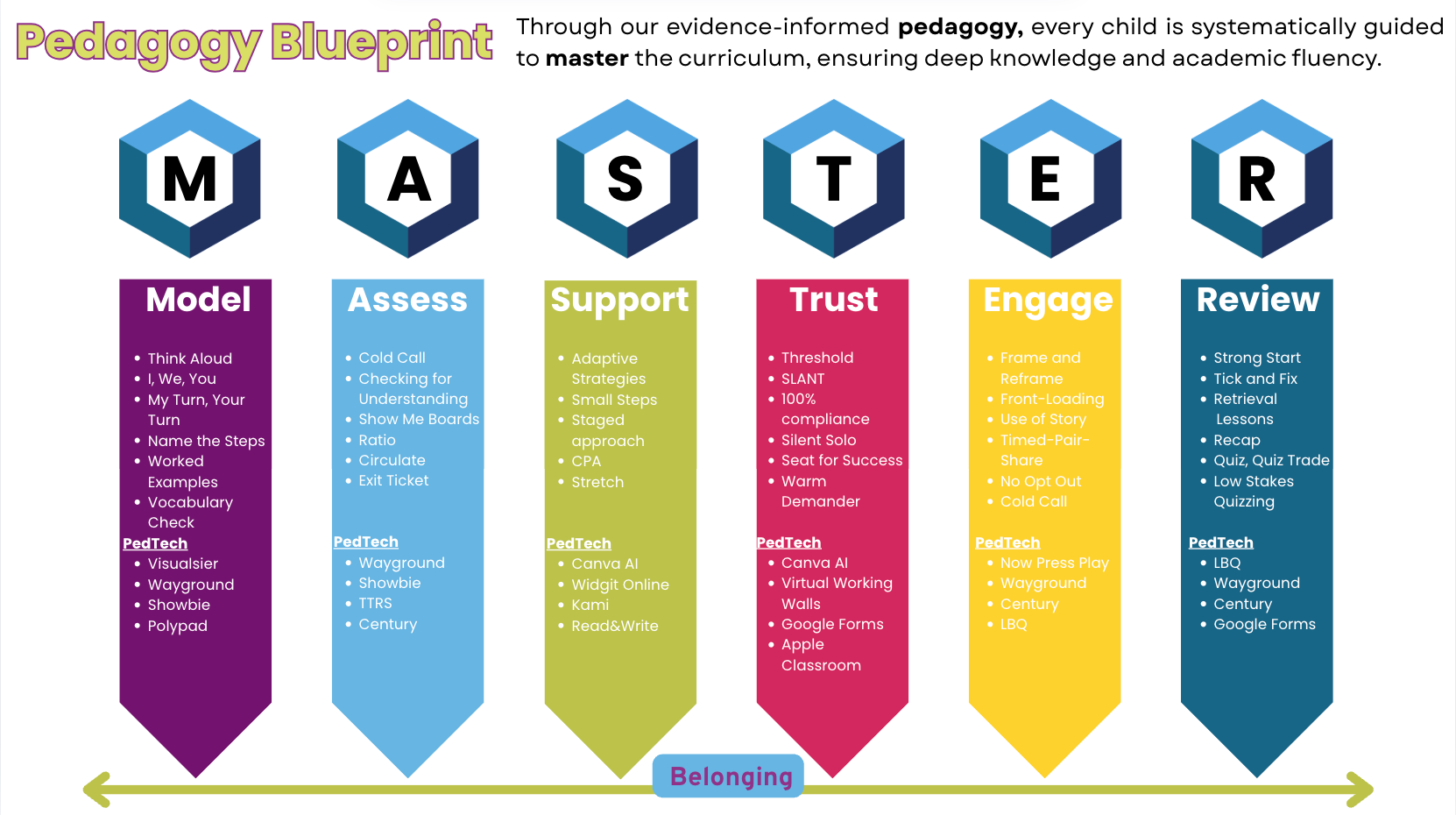
At this year's annual trust conference, the energy was focused on a simple but ambitious theme: IGNITE. We broke our work into three key strands—igniting learning in our classrooms, igniting our professional development, and igniting our wider school community. For our Key Stage 1 and Key Stage 2 teachers, the highlight of the morning was relaunching our Rainbow Pedagogy Blueprint.
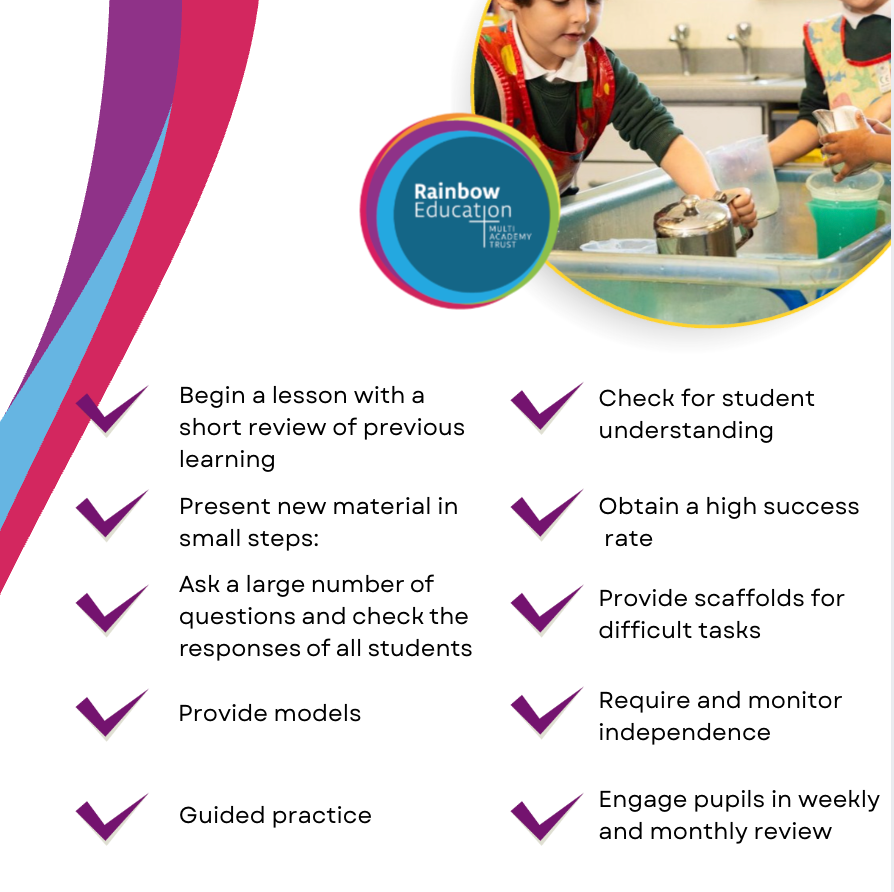
This blueprint isn't just a document on a shelf; it's our shared commitment to classroom excellence. Grounded in cognitive science and Rosenshine’s Principles of Instruction, it helps us build a unified language for teaching while keeping pupil belonging at the core of everything we do. As Dylan Wiliam states:
“If we create a culture where every teacher believes they need to improve, not because they are not good enough, but because they can be even better, there is no limit to what we, and more importantly our pupils, can achieve.”
Rethinking the Wipeboards:
Pedagogy is ultimately the craft of teaching—the intentional choices we make every minute to bring learning to life. In our afternoon session, we zoomed in on a technique that every teacher knows: Show Me Boards.
On the surface, wipeboards seem straightforward. But when used deliberately as a formative assessment tool, they completely reshape classroom dynamics. Instead of calling on one confident student with their hand up, Show-Me Boards require active, simultaneous participation from every single pupil in the room.
What Does Mastery Look Like?
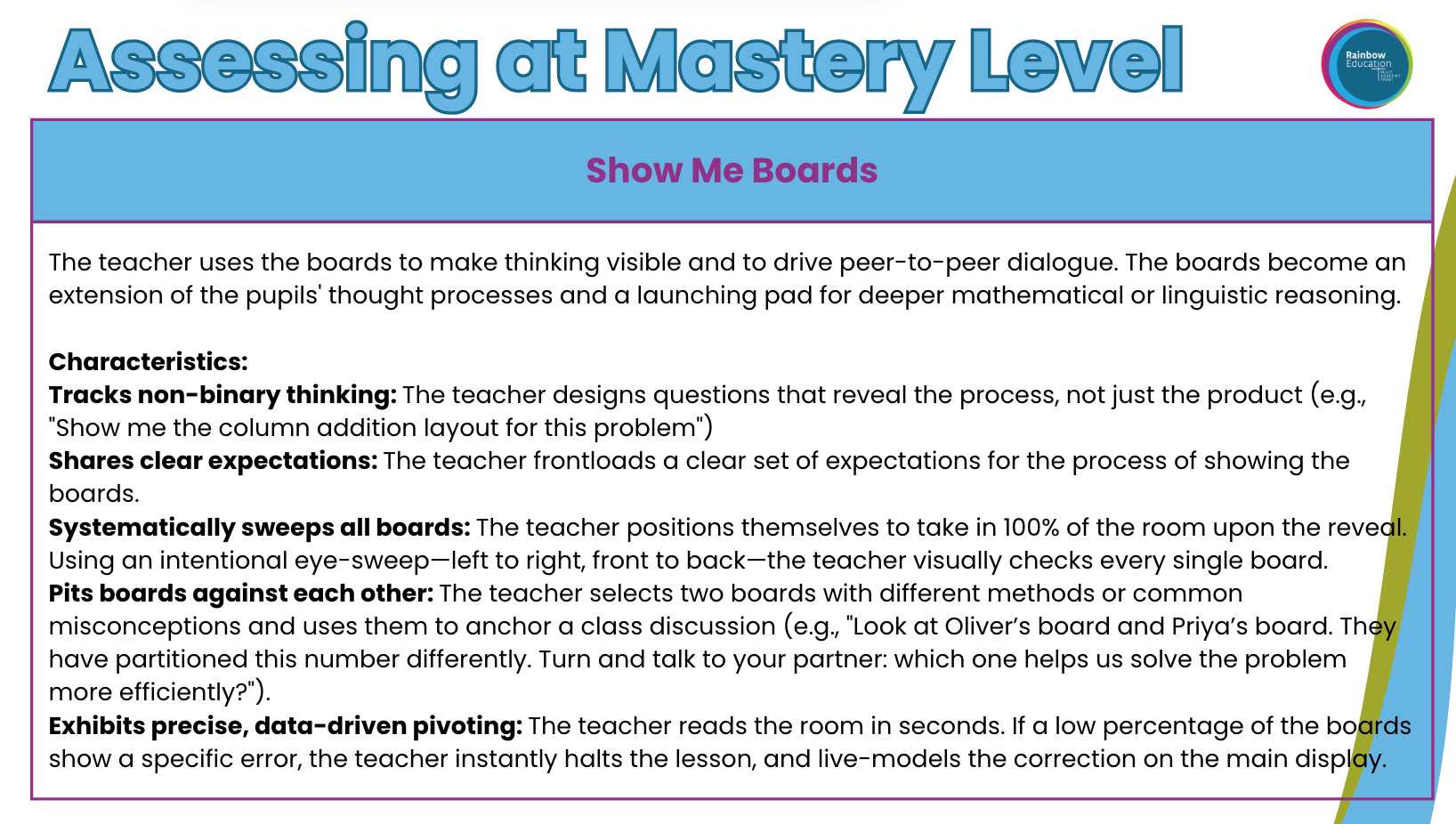
In our workshops, we explored what it takes to elevate Show-Me Boards to a mastery level. It comes down to intentionality. Masterful teachers don't just check for final answers; they design questions that expose student thinking—asking children to show their column layout, sketch a diagram, or draft a quick reasoning statement. They sweep the room systematically, capturing an instant visual snapshot of understanding across the whole class. When misconceptions surface, they don't move on - they bring contrasting boards together for peer discussion or pivot immediately to re-model the concept.
Watching classroom clips of this technique in action prompted rich, practical reflection among our staff. The consensus was clear: when Show-Me Boards are embedded as a low-stakes, high-engagement routine, pupils feel empowered to try, erase, and refine their ideas without fear of making mistakes.
See It in Action
Curious to see how diagnostic questioning and wipeboards work together in a live classroom setting? Watch this short classroom clip from the Education Endowment Foundation Research School network:
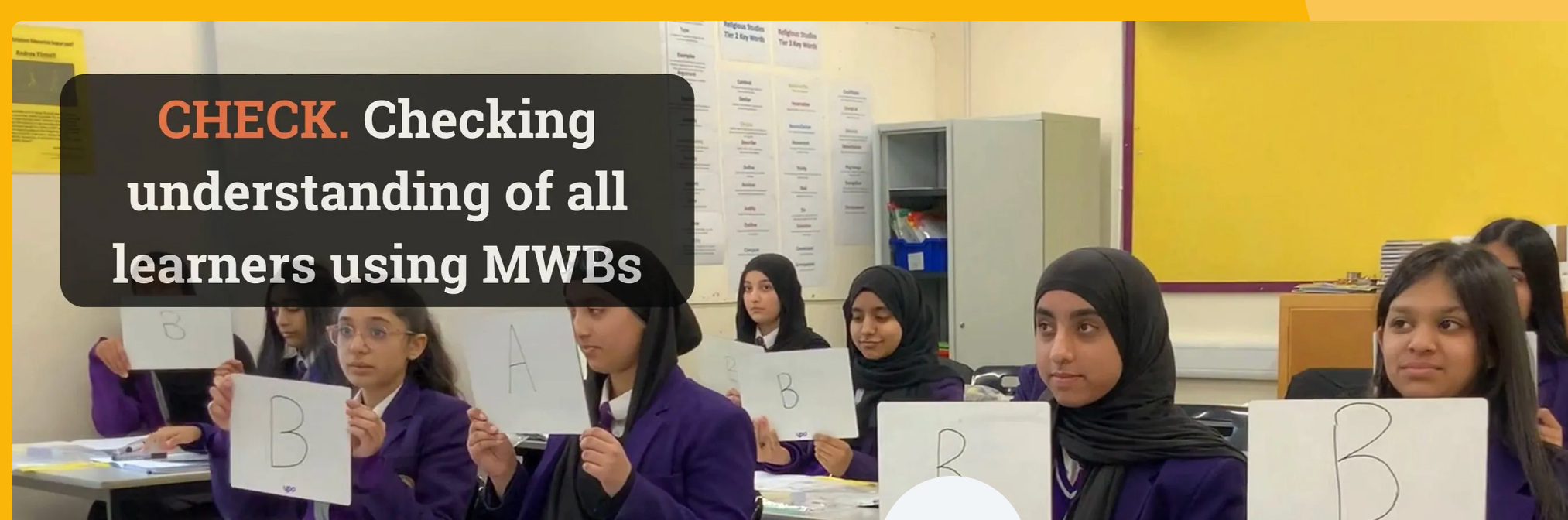
Watch the Classroom Clip: Using Diagnostic Questions & MWBs